Not Forgotten
On a Sunday morning in April 2019, in Sirgadji, a village in northern Burkina Faso, 80-year-old pastor Pierre Ouédraogo finished the service and stepped outside to talk with his people. Pastor Ouédraogo had preached here for nearly 40 years. He was aware of the danger. Friends had urged him to leave.
“He told his family he would rather give his life than abandon his congregation.”
A dozen men on motorcycles rode into the churchyard and gathered everyone under a nearby tree. After taking their Bibles and phones, the men separated the pastor and men of the church from the others and ordered them to convert to Islam. When they refused, the men led six behind the church and killed them. Among them were Pastor Ouédraogo, his son, and his son-in-law.
This was an Assemblies of God church. Pastor Pierre was our fellow pastor. In Burkina Faso, the Assemblies of God is one of the largest denominations in the country. When we speak of the persecuted church, we are not speaking of strangers; we are speaking of friends.
Yet, there is a deeper reason to care than our shared faith. When Saul traveled toward Damascus with warrants in hand, the risen Jesus did not ask him why he was persecuting the church. He asked why Saul was persecuting Him (Acts 9:4-16). Christ identifies with His people so completely that what falls on them falls on Him. Standing with the persecuted is not limited to an act of charity offered to a vulnerable branch of the family. It is standing near the wounds of our Lord.
The Scale and Scope
Currently more than 388 million Christians live under high or extreme persecution. That is one in seven believers worldwide, and one in five believers in Africa. In a recent year, 4,849 were killed for their faith, more than 4,700 were arrested, and over 224,000 were driven from their homes. Numbers that large can lose their meaning. Let me introduce a few of the people represented in these numbers.
In Eritrea, our own tribe is outlawed. Since 2002, the government has recognized only four religious bodies. Most evangelical and Pentecostal churches are not among them. Officials watch, raid, and even jail believers without any charges. Officials have placed some of our church leaders in metal shipping containers that bake by day and freeze at night. Over time their tactics have changed and solitary confinement has been their strategy, a quiet, prolonged attempt to break their prisoners. They have held at least four of these church leaders for more than 20 years and have never formally charged them.
These stories are not isolated. Across the globe, the pattern repeats in different forms. In one of the largest nations in Asia Pacific, the pressure is quieter but just as heavy. New national rules require clergy to align their teaching with state ideology and forbid ministry to children, local evangelism, or outreach into the community without governmental approval. Police raids within the house church networks harass and arrest pastors. Lay leaders are under constant pressure.
In certain countries in Latin America, church leaders live under surveillance to ensure loyalty to the state. In India, officials use laws written to stop conversion against anyone who speaks of Jesus. They arrested more than 1,600 Christians in one year accusing them of the crime of proselytizing. In Myanmar, believers are among the most displaced people on earth.
How They Form us as Disciples
Something surprising happens when you reflect on these stories and others like them. You expect to come away burdened for these believers, but we also come away challenged by them.
After the killings at Sirgadji, the leader of the Assemblies of God in Burkina Faso told his people to maintain their friendships with their Muslim neighbors. This is not weakness. This is the gospel with the volume turned all the way up. It works. These Muslim neighbors helped the church bury its dead. Researchers across northern Nigeria found that congregations who refused to retaliate kept growing, while those who answered violence with violence left behind communities where neighbors no longer speak to each other.
“Religious pressure tends to rise where the church is advancing rather than where it is fading.”
So let the challenge to us be specific. Pastor Pierre had somewhere safer to go and did not go. Many of us have never considered what we might need to surrender to stay where God put us. Believers in Burkina Faso kept their friendships with Muslim neighbors after extremists murdered their pastor. This is harder than anything many of us attempt with people we have merely been taught to distrust. A congregation that meets in a living room — whose church members have written farewell letters in advance while waiting arrest or worse — still gathers every week.
Ask yourself, What does it take to keep you where God has called you? We acknowledge that there are times to depart as Paul did on one occasion (Acts 9:23-31). But perhaps there are times when our presence allows others to observe our suffering as it increases the effectiveness of our witness in dark moments.
How we Honor Them
Most of us feel helpless reading these previous accounts. But Scripture is not vague about what belongs to us. We are to remember them, advocate for them, and share with them.
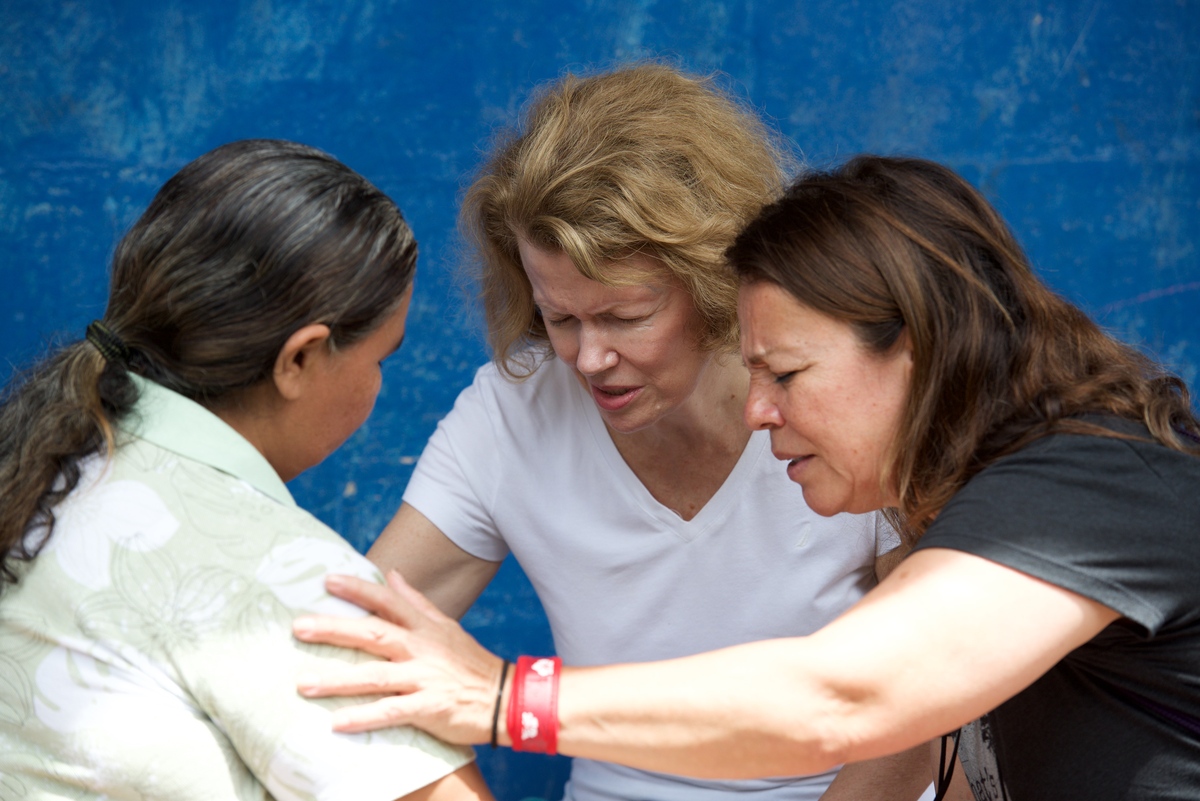
Remember Them in Prayer
In the Book of Hebrews we read, “Remember those who are in prison, as though in prison with them, and those who are mistreated, since you also are in the body” (Hebrews 13:3, ESV). Todd Nettleton from The Voice of the Martyrs says,
““The first request of persecuted Christians is that we pray for them."”
- Pray for resilience to remain true to the faith. Paul boasted of churches for their “steadfastness and faith in all your persecutions” (2 Thessalonians 1:4, ESV).
- Pray that no believer under pressure be worn down into letting go.
- Pray for strength to live a vibrant faith, not merely to endure. Paul asked that believers be “strengthened with power through his Spirit” in the inner being (Ephesians 3:16, ESV). Ask that our family not only survive but flourish where they are.
- Pray for deliverance. When Peter was in chains, “earnest prayer for him was made to God by the church” (Acts 12:5, ESV). An angel woke him, the chains fell off, and the iron gate opened by itself. When Paul and Silas sang at midnight in jail “all the doors were opened” (Acts 16:26, ESV). Ask for prison doors to open today.
- Pray that persecutors are drawn to Christ. Jesus commanded believers to “pray for those who persecute you” (Matthew 5:44, ESV). The man holding the coats at Stephen’s stoning later wrote much of the New Testament.
- Pray for faithfulness when deliverance does not come. In the same chapter where Peter walked free, James was put to the sword (Acts 12:2). Both were prayed for, and both were loved. So we pray what Jesus told Smyrna: “Be faithful unto death, and I will give you the crown of life” (Revelation 2:10, ESV). We can honestly pray this, because Jesus said, “I have overcome the world” (John 16:33, ESV).
Sometimes the door stays shut while God works. An Assemblies of God pastor in a country that restricts gospel access served three prison terms for sharing his faith. During his third term he led 42 prisoners and two guards to Christ. One of these prisoners led more than 700 people to Christ during his first month of freedom. Some believers ask us not to pray for their release, but for strength and an open door where they are (Colossians 4:2-4).
Speak Where They Cannot
Isaiah put it plainly: “Seek justice, correct oppression” (Isaiah 1:17, ESV). Advocacy is not politics dressed up as ministry. It is using a freedom our brothers and sisters do not have by raising awareness on their behalf.
- Share stories with other leaders and friends. Persecution seldomly makes the news, and when it makes headlines, it often disappears quickly before it ever does as a reality in the local context.
- Ask before you act. Outside pressure sometimes brings reprisals on the believers it was meant to protect.
- Use what already exists: the U.S. Commission on International Religious Freedom, the State Department’s list of countries of particular concern, and your own elected representatives.
Share What you Have
In a cold cell near the end of his life, Paul asked Timothy to bring his coat and his books (2 Timothy 4:13). It is a small, human request, and it shows what caring for the suffering usually looks like. AG World Missions often sends assistance from gifts given to the Suffering Church Fund through trusted networks to aid the suffering and persecuted on the ground. The fund provides for leaders and families who have lost a breadwinner, care for widows and orphans, and support to rebuild churches and homes.
Doing our Part
The Assemblies of God in the United States has what many of our sister fellowships do not. We have been blessed with financial resources, a free public square, and large missionary presence already living in many places where the church is under pressure. That is not a privilege to enjoy. It is a responsibility to leverage.
Many in the evangelical community observe November as “Suffering Church” month.
“A practical step is when pastors set aside one Sunday each year during this month to raise awareness, pray, and receive an offering for the suffering and persecuted church.”
The World Assemblies of God Fellowship brings what we cannot supply alone. Nearly 90 million believers, some of them led by men and women who have buried their own martyrs, can speak with a credibility that no single country’s church possesses. Our part can aid this task to help that voice work together in unity, and to speak with them rather than merely about them.
A Promise That Holds
Scripture never pretends that God is a distant spectator. When Jewish leaders were stoning Stephen, he saw Jesus “standing at the right hand of God” (Acts 7:55, ESV). Not seated, but standing, as though He had risen to His feet for a dying servant. God told Israel, “When you pass through the waters, I will be with you” (Isaiah 43:2, ESV). He keeps a record of every tear (Psalm 56:8). Not one of them has been forgotten by Christ.
The Early Church did not pray for the threats to go away, but rather asked God to “grant to your servants the boldness to continue speaking the Word” (Acts 4:29, ESV). After being flogged, the apostles left “rejoicing that they were counted worthy to suffer dishonor for the name” (Acts 5:41, ESV). James tells harassed believers to “count it all joy” (James 1:2, ESV).
So, pray for our spiritual brothers and sisters not only for relief, but for joy in the middle of it, for strength that outlasts the pressure, and for grace that is sufficient on the worst day (2 Corinthians 12:9).
We also need to guard our own hearts. It’s easy to grow cynical and conclude that the world is dark and hopeless. Scripture teaches that creation does groan (Romans 8:22). But cynicism is not realism, and it is not faith. Peter told believers under pressure to be ready to give “a reason for the hope that is in you” (1 Peter 3:15, ESV).
“The church’s witness is a signpost of hope not just in times of peace, but in times of suffering and turbulence.”
This is what suffering does to a witness. It magnifies it.
Jesus made one promise about His church: “the gates of hell shall not prevail against it” (Matthew 16:18, ESV). The gates are the gates of death, and the threat behind them is not imaginary.
Persecution and martyrdom are real, and the grave is where they lead. But the fuller sense of the promise is a declaration of victory that is already settled. Death, the grave, and every force of darkness may press hard against the church, yet they cannot hold back the advance of Christ’s kingdom, and they cannot permanently defeat God’s people.
The proof is not that persecution has stopped. It is that in Damascus and Kaduna, in living rooms and coffee shops across Asia, and at a prison gate in Cuba, believers are still gathering, still baptizing, still sending. As Paul testified, we are “struck down, but not destroyed” (2 Corinthians 4:9, ESV). We stand with them as family. And we do so not because we are unsure how the story ends, but because we are certain (Romans 8:37-39).
— John L. Easter
AG World Missions Executive Director